
Incident Response Plan Template for Small Business
When an alert lands at 2 a.m., the first failure is often not technical. It is uncertainty about who decides, what gets isolated, which evidence must be preserved, and how the business communicates while facts are still developing. An incident response plan turns those decisions into an executable operating process before pressure distorts them.
An incident response plan template for small business should define ownership, escalation paths, threat scenarios, containment and recovery steps, evidence preservation, and reporting responsibilities. It should be short enough for a lean IT team to use, specific enough to guide decisions, and tested before a real incident exposes gaps.
The plan also has to connect detection, communications, and operational recovery. That makes SIEM, log management, and security operations part of the broader readiness conversation, not a substitute for clear human ownership. Start by defining what the plan covers and who is accountable for activating it.
What Is an Incident Response Plan?
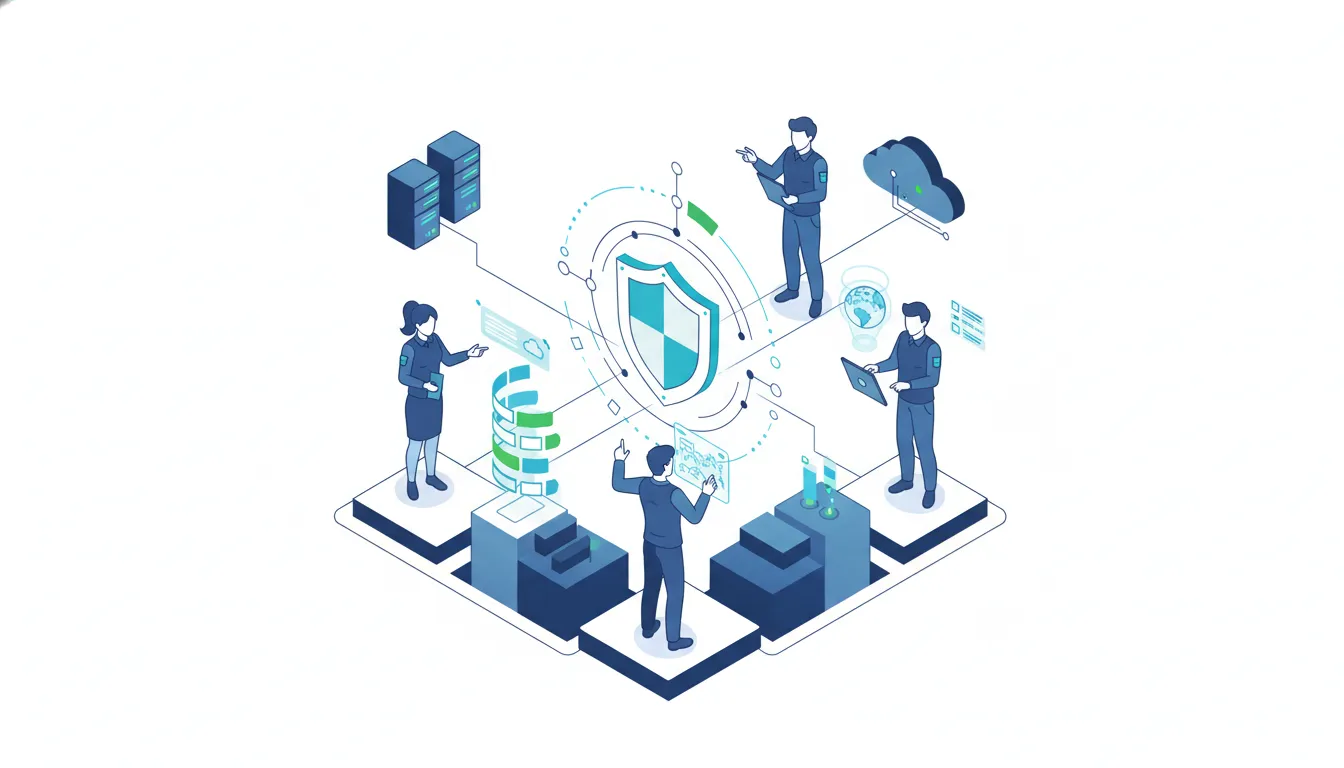
An incident response plan is the operating document your team uses when a suspected cybersecurity incident demands decisions faster than normal governance allows. It records the response procedures, assigns accountable roles, and establishes how the organization will identify, contain, eradicate, and recover from an incident. It also defines how evidence is preserved and how the incident is reported. Palo Alto Networks describes these as core elements of an incident response plan.
For a small business, the plan should start with purpose and scope. State which systems, identities, locations, data types, and third parties are covered, then identify the situations the plan addresses. Useful scenarios might include ransomware, a compromised administrator account, business email compromise, exposed credentials, malware on an endpoint, or suspected unauthorized access to regulated data. The objective is not to predict every variation. It is to give the team a defensible starting point for the incidents it is most likely to face.
Ownership must be explicit. Name the incident lead, technical responders, system owners, communications owner, executive decision-maker, and any MSP, MSSP, legal, insurance, or specialist contacts that may be involved. One person can hold several roles in a small organization, but the assignments should still be separate on paper. Include alternates and escalation triggers. A contact list that exists only in the compromised identity system is not an executable contact list.
Execution also depends on evidence discipline. Define who can collect logs, isolate devices, preserve relevant messages, record timestamps, and maintain chain-of-custody notes. Specify the reporting channel, incident record, decision log, and approved communications method. These controls reduce confusion when facts are incomplete and help distinguish observed evidence from assumptions.
Q: What makes an incident response plan template for small business usable under pressure?
A: It is specific enough to execute without improvising. It names people and backups, maps common threat scenarios to actions. Provides reachable contacts and escalation criteria, identifies evidence-handling steps, and gives responders a clear place to record decisions. A short plan that is accessible, tested, and maintained is more useful than a comprehensive document nobody can find or follow.
The Six Phases of Incident Response
A small team does not need a separate department for each phase. It does need an explicit sequence, named ownership, and enough flexibility to revisit an earlier phase when new evidence changes the picture. The following model moves from readiness through improvement and can serve as the operating backbone of an incident response plan.
-
Preparation
Preparation is the work completed before an incident: policies, tools, access, and supporting resources. Document who can declare an incident, who can isolate an endpoint, who communicates with leadership, and who preserves evidence. Maintain current contact details, administrator access paths, backup information, and a list of critical systems. A small business may assign several roles to one person, but the assignments should still be explicit. The phase is not complete because a document exists. The team should be able to find and use it under pressure. This definition of preparation follows the established incident response model of developing policies, tools, and resources to handle incidents.
-
Identification
Identification is the process of detecting and confirming a potential incident. Establish practical triggers, such as a credible phishing report, an endpoint alert, unexpected privileged activity, or suspicious authentication events. Record what was observed, when it was observed, which systems are involved, and who made the report. Avoid treating every alert as a confirmed breach, but do not dismiss an unusual signal because the team lacks complete information. The immediate objective is to create a defensible initial picture and decide whether the response process should be activated.
-
Containment
Containment limits damage and prevents further spread. For a small team, that might mean disabling a compromised account, isolating an endpoint from the network, restricting a cloud session, or blocking a malicious indicator. Record the action and its business impact before making changes where feasible. Containment is not the same as resolution. An infected machine can be isolated while the underlying access path remains active, so the team must preserve relevant evidence and continue investigating.
-
Eradication
Eradication removes the root cause. Depending on the findings, this can involve removing persistence, closing an exploited vulnerability, rotating exposed credentials, deleting malicious accounts, or rebuilding an affected system from a trusted source. Do not declare eradication simply because an alert stopped. Validate that the suspected entry point and related indicators have been addressed, and document what was changed. If the root cause is uncertain, record that uncertainty and define the evidence needed to resolve it.
-
Recovery
Recovery restores and validates system functionality. Bring systems back according to business priorities, using known-good backups or rebuild procedures when appropriate. Confirm that authentication, applications, integrations, logging, and required data work as expected before returning a system to normal operation. Incident response and business continuity are related but distinct: response manages the security event, while continuity addresses how the business sustains essential operations. NIST recommends developing IT disaster recovery with the business continuity plan and restoring hardware, applications, and data to meet business recovery needs: NIST guidance for small businesses.
-
Lessons Learned
Lessons learned analyzes both the incident and the response. Review the detection signal, decisions, communications, evidence handling, system changes, and business effects. Identify which control failed, which step was unclear, and which information the team could not access quickly. Convert those findings into owned updates to the plan, technical controls, contact lists, or training. A short, candid review is more useful than a polished document that leaves operational gaps unchanged.
What to Include in Your Incident Response Playbook
A usable playbook turns general intent into decisions a small team can execute under pressure. Keep the operational core concise, assign an owner for each control, and record where the authoritative contact details, procedures, and evidence will live.
| Plan element. | What to document. | Owner or decision. |
|---|---|---|
| Detection and triage. | Signals and severity. | Who activates response. |
| Containment. | Isolation and access actions. | Who approves impact. |
| Evidence. | Collection and custody notes. | Who protects artifacts. |
| Recovery. | Priorities and validation checks. | Who authorizes restoration. |
- Roles and authority: Name the incident commander, technical lead, communications owner, business executive, legal or privacy contact, and MSP or MSSP escalation point. Define who can isolate a host, disable an account, preserve evidence, approve restoration, and communicate externally. Assign alternates for every role.
- Severity and escalation: Describe what makes an event low, moderate, or critical. Use practical triggers such as suspected credential compromise, ransomware indicators, material service disruption, privileged-account activity, or possible exposure of regulated data. For each level, state who is paged, who joins the response, and what decisions require executive approval. Do not rely on an informal rule that the loudest alert wins.
- Contact tree and communications: Maintain current names, phone numbers, email addresses, vendor contacts, insurance contacts, and escalation paths. Document the approved incident reporting mechanism, a designated war room, and a secure channel using the organization-approved encryption software. Assume the normal email or collaboration tenant may be unavailable or compromised, and identify an alternate channel before an incident.
- Evidence handling: Specify what responders preserve, how they capture timestamps and system context, where artifacts are stored, and who may access them. Include chain-of-custody fields for the collector, transfer, hash or integrity check when available, and storage location. The objective is a defensible record, not a screenshot collection scattered across personal devices.
- Reporting and issue tracking: Give every incident a unique identifier, status, owner, severity, timeline, affected assets, decisions, actions, and open questions. Record what was known at each decision point, including uncertainty. For cyber-enabled crime, NIST points small businesses to the FBI's Internet Crime Complaint Center (IC3). Its reporting guidance is separate from any legal or regulatory advice.
- Recovery, backups, and records: Link the playbook to tested backup and restoration procedures, including recovery priorities for hardware, applications, and data. NIST recommends developing IT disaster recovery with business continuity and restoring technology in line with business needs (NIST small-business incident response guidance). Record restoration validation, exceptions, approvals, and the final lessons learned. The FTC breach response guide is a useful reference after a breach, but it does not replace organization-specific counsel or applicable requirements.
Review the playbook when systems, vendors, staffing, or business priorities change. A short document with current contacts and explicit decision rights is more valuable than a comprehensive template nobody can operate.
How an Incident Response Plan Template for Small Business Connects to SIEM Operations
A usable incident response plan needs an evidence stream that the response team can trust. That is where SIEM, log management, and security operations support the plan. Monitoring can surface a suspicious authentication pattern, endpoint event, or system change, while the documented workflow determines who validates it, what gets contained, and how decisions are recorded.
The SIEM is not the incident commander, and it is not a substitute for ownership. A small business still needs named responders, escalation paths, approved containment actions, communication procedures, and recovery criteria. The tool strengthens those decisions by making relevant activity visible and preserving a timeline that responders can examine under pressure.
Use detection to trigger a defined decision path
In the identification phase, monitoring should help distinguish an actionable incident from routine noise. The plan can define which signals require immediate review, which evidence the reviewer collects, and when the issue moves from triage to containment. A designated owner should document the decision, timestamp, systems involved, and people notified. That record keeps the response operational rather than dependent on one administrator's memory.
HSEC Sentinel is designed for this evidence-oriented model. It cryptographically seals events at ingestion, supports an immutable chain of custody, and maintains tamper-evident records. It also supports configurable retention periods, including 30-day, 90-day, one-year, and custom options. The appropriate setting depends on the organization's operational and compliance requirements, so retention should be an explicit planning decision rather than an assumption. Learn more about HSEC Sentinel in the context of a broader response process.
Connect evidence to containment, recovery, and reporting
Detection alone does not contain an incident. The response plan should identify who can isolate an account, segment a system, preserve a disk image, or engage an external specialist. Monitoring records can then help establish what happened before and after that action. This is especially important when the business must explain the event internally, coordinate with an MSP or vCISO, or support an authorized investigation.
Security operations should also connect to preparation. Ayewo supports recurring vulnerability scanning, AI-powered penetration testing, and compliance reporting. Those capabilities can expose weaknesses before an incident and help maintain evidence of assessment activity, but they do not replace incident ownership or a complete response plan. For a related discussion of continuous security monitoring, connect monitoring practices to the controls and reporting expectations relevant to your environment.
The practical design principle is simple: let the SIEM preserve reliable facts and accelerate visibility, while the incident response plan governs authority, judgment, communication, and recovery. That division gives a small team a repeatable process without pretending that software can make the consequential decisions for it.
Testing Your Incident Response Plan: Tabletop Exercises Explained
A tabletop exercise tests whether your written procedures work when people must make decisions with incomplete information. For a small business, the objective is not to stage a theatrical breach. It is to expose unclear authority, missing contacts, unavailable evidence, and recovery assumptions before an actual incident forces those issues into the open.
Choose a scenario that reflects your exposure
Start with a plausible event tied to your environment and business impact. Examples include a compromised administrator account, ransomware on a file server, a cloud identity takeover, or suspicious activity involving regulated data. Define the initial facts, what remains unknown, and what the exercise is intended to test. Keep the scope narrow enough that a small team can work through it in one session.
Assign decision-makers, not just attendees
Identify the incident lead, technical responder, business owner, communications lead, and note-taker. If legal, compliance, an MSP, or a vCISO will be consulted, name the trigger for bringing them in and the person responsible for making contact. Clear ownership matters more than having a large attendance list. vCISO incident response planning can help clarify how an external security leader fits into that structure.
Use injects to test decisions and communications
Introduce new facts at deliberate points: an endpoint is offline, a backup cannot be verified, an employee reports a suspicious message, or a key contact is unavailable. Ask what the team does next, who approves containment, which system becomes the source of truth, and how stakeholders receive updates. Record decisions, assumptions, owners, timestamps, and unresolved questions. This creates an operational record rather than a discussion that disappears when the meeting ends.
Evaluate recovery, evidence, and follow-through
Test more than detection. Confirm that the team knows how to preserve relevant logs and other evidence, document its handling, and coordinate restoration with business continuity priorities. NIST notes that IT disaster recovery should be developed with business continuity, and that technology recovery should restore hardware, applications, and data in time to meet business needs: NIST small-business incident response guidance.
Close with an after-action review. Convert each gap into a specific plan change, assigned owner, and verification step. Do not assume a universal testing cadence; choose a review cycle that reflects material changes to systems. Personnel, suppliers, and risk, then revisit the exercise results when the plan is updated.
Frequently Asked Questions
How do I create an incident response plan?
Start by defining the plan's purpose, scope, and threat scenarios. Assign an owner and named responders, then document detection, triage, containment, eradication, recovery, evidence preservation, communications, and reporting procedures. Build around the systems and business processes your team must actually restore.
What are the key components of an incident response plan?
A usable plan includes roles and escalation paths, incident classification, response playbooks, contact information, secure communications, an issue-tracking method, evidence-handling instructions, recovery dependencies, and decision records. The process should cover preparation, identification, containment, eradication, recovery, and lessons learned.
Why is an incident response plan important for a small business?
It reduces ambiguity when staff are working under pressure. Rather than deciding from scratch who can isolate a system, preserve evidence, contact leadership, or coordinate recovery, the team has an agreed operating model. It also exposes gaps in logging, backups, access control, and ownership before an incident.
How often should an incident response plan be tested and updated?
Test it whenever major systems, vendors, staffing, or escalation contacts change, and use tabletop exercises to validate realistic scenarios. Update the plan after each exercise or incident, recording decisions, gaps, and assigned corrective actions. NIST describes recovery planning as an activity that includes planning, playbook development, testing, and improvement: NIST small-business guidance.
Who should participate in incident response planning?
IT and security should lead the technical workflow. But effective planning also includes an executive decision-maker and the people responsible for legal, compliance, communications, HR, finance, and business continuity. Small businesses may assign several roles to one person or include an MSP, MSSP, or vCISO as an escalation partner.
Get started with a practical response plan
A focused review can help your team turn documented response steps into an operational plan, with clear ownership, escalation paths, and evidence-handling decisions. Hudson Infosec works with organizations that need enterprise-grade security guidance without unnecessary complexity. Request a Demo to discuss where your current plan is strong and where it needs refinement.