
Proof of Work Cybersecurity Audit: What Auditors Accept
Many serious compliance failures stem from missing proof rather than from a weak technical defense. Your security team may know the system is safe, but an auditor only trusts what you can prove.
Schedule a consultation to build an audit-ready evidence process today.
A proof of work cybersecurity audit is the official review of physical evidence showing that your security controls are active and running as designed. A NIST security testing guide shows that this proof must use real items like scans and central logs instead of plain written lists of policies. Without this physical proof, serious compliance failures can happen, which is why smart leaders stand up a defensible vCISO practice to collect security records constantly. To pass, you must give your auditor clear, central logs that show your team checks and maintains your defenses over each audit assessment period. These files are the main items that prove your daily security controls are active, working well, and fully protected from unwanted or unauthorized changes.

Understanding how to meet the needs of an audit team needs a clear plan that goes beyond simple checklists. To build a secure, compliant system, you must learn What Auditors Mean by Proof of Work in a Security Audit. The path begins with
What Auditors Mean by Proof of Work in a Security Audit
In a cybersecurity audit, knowing your systems are safe is not enough. You must prove it. To an auditor, proof of work means the real records that show your rules are in place. The National Institute of Standards and Technology defines this proof. It is the documentation that shows a security control has been set up and is working as intended. Without this clear trail, even the most secure network can fail an audit.
Q: What is the main difference between knowing a system is secure and proving it in an audit?
A: Knowing means you trust your tools. Proving means you have clean, permanent records that show your security works. You must have verifiable logs and files to show the auditor.
The risk of missing evidence
Many firms believe they are safe because they have strong firewalls or antivirus software. But during a review, you do not get points for silent defense. In fact, most audit findings result from a lack of proof, not from poor security. The work you do is only as good as the logs you keep. If you cannot show when and how a control ran, the auditor will assume it did not run at all. This is why you must keep your security program audit-ready by saving data long before the audit starts.
The value of immutable records
There is a big gap between knowing your systems are secure and proving it. Proving means you have a solid, clear trail of facts. This trail must be verifiable and kept safe from any change. When you prepare for an audit, you need to show that you did the work each day. This is the difference between active defense and passive trust. You cannot rely on hand-written notes or vague promises to satisfy an auditor.
How a virtual CISO provides proof
When a virtual CISO manages compliance, the proof of work is the set of records you create. These are produced during regular health checks and internal security audits. These records must be gathered using a clear, repeatable, and audit-ready evidence process. This proves that you do not just have a security plan on paper, but that you execute it daily. When you keep these records organized, you can easily show that your controls are active and effective.
Why Standard Log Files Fail as Compliance Evidence
Many teams think standard system logs are enough to pass a security review. They keep local files on other servers and hope for the best. But when the auditor asks for a proof of work cybersecurity audit, simple text files will not cut it. Standard event logs are easy to edit, lose, or miss. They do not give the proof that your security works each day.
The risk of local and editable files
Local logs can be changed by anyone with admin rights. If a breach occurs, a bad actor can delete their tracks. This is why standard logs do not satisfy modern compliance standards. Under NIST SP 800-53A rules, an audit requires you to show that your controls are active and monitored. You cannot do this with plain text files on a local disk. To solve this, tamper-evident logging systems are key for compliance because they show auditors that the logs have not been changed. This ensures no one has hid a breach or bad deed. When a system is not tamper-evident, there is no way to trust the data. An auditor will reject the logs as weak proof.
Immutability rules for major frameworks
Major rules like HIPAA and PCI-DSS have strict laws about how you store data. System event logs must be kept in an immutable state for long periods to meet strict rules. You cannot just keep them on a local server. If your logs are not immutable, they do not count as proof. Here are three reasons why standard logs fail:
- No defense against changes: Standard files have no built-in defense to stop users from editing or deleting data.
- No proof of history: You cannot prove when a log was made or if it is a full record.
- No secure backup: Without an immutable trail, a system crash or hack can wipe out months of compliance proof.
Without a way to lock your logs, you cannot show that your records are true.
The burden of scattered logs
When logs live in different places, audit prep becomes a slow and painful chore. A lack of central compliance evidence is a common finding that causes friction and audit delays, even when security controls are truly strong. Your team will waste hours looking for files across many servers. To avoid this, you need a smart, audit-ready evidence process. Storing logs in one place makes reviews fast and simple. It gives auditors a single place to verify your security posture without headache or delay. When you have one central hub for all evidence, you can answer auditor questions in minutes instead of weeks.
Immutable Audit Trails: What Makes a Log Tamper-Evident?
To pass a rigorous proof of work cybersecurity audit, a firm must show that its security logs are reliable. Simple text files are not enough because anyone with admin rights can edit or delete them. Auditors need a system where any change to log data is immediately clear. This is what makes a log tamper-evident, showing that the system has kept its compliance state intact over time.
| Attribute | Standard Log File | Tamper-Evident Audit Log |
|---|---|---|
| Change detection. | Editable without a trace. | Any change breaks the hash chain. |
| Integrity. | No proof of alteration. | Clear proof of chain of custody. |
| Retention. | Can be deleted locally. | Immutable for HIPAA and PCI-DSS. |
| Auditor confidence. | Often rejected as weak. | Accepted as reliable evidence. |
The role of cryptographic hashing
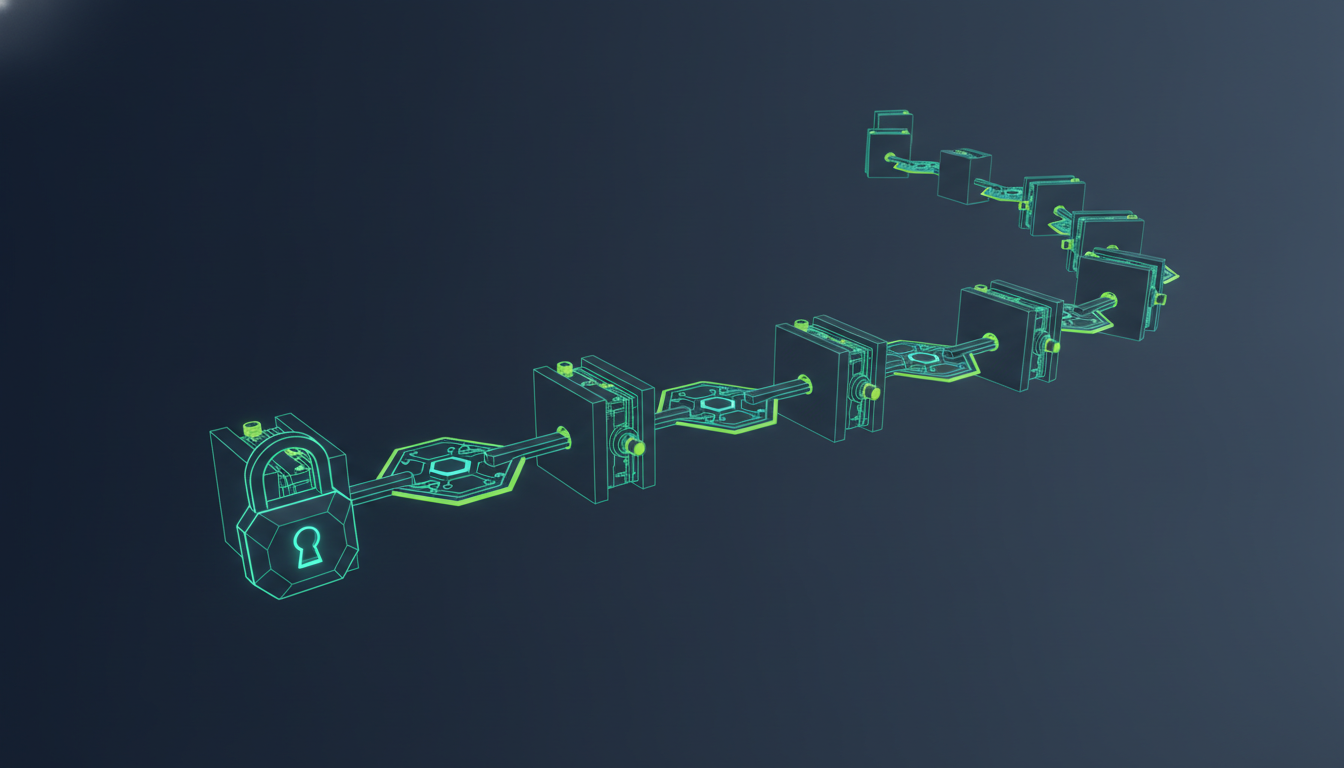
To keep compliance files safe, you must protect them from changes without approval. A tamper-evident log uses cryptographic hash chains to seal each event. Each new entry contains a unique stamp of the last block, creating an unbreakable chain. If someone tries to alter a past entry, the hash stamps will no longer match. This immediately alerts the system to the breach.
This hashing process acts like a digital wax seal on your data. In a typical database, a clever intruder can alter records and cover their tracks. But with a hash-chained log, even a tiny change to a single character breaks the entire chain. This setup gives auditors clear proof that your past security events have not been changed or forged.
Chain of custody in logging
Auditors value evidence that has a clear history of ownership. When checking security over time, you must prove that nobody has touched or changed the records. Using tools like HSEC Sentinel helps you build an immutable chain of custody. This tool records cryptographically verified events, creating tamper-evident compliance records that hold up under close look.
When you cannot trace who accessed or changed a file, your audit is at risk. A verified chain of custody solves this by tracking every single action. It links each log entry to a specific, verified user and device. This makes it impossible for an insider to make silent changes without leaving a clear trail.
Compliance files must be stored in a safe way that keeps their integrity intact. This means protecting files from any unwanted changes during the entire audit period. Under NIST SP 800-115 guidelines, a robust security log must prove that controls are active. It also shows they are checked at regular intervals. This proof shows that your security posture is real, rather than a brief point-in-time check.
Verification of evidence repositories
Having a safe store for logs is only the first step. To maintain a strong audit defense, a firm needs to run regular checks of the evidence store itself. These regular self-checks ensure that all files are up-to-date and complete before the real auditor arrives. Catching missing data or broken chains early keeps you from facing painful audit delays later.
How Proof of Work Satisfies the Cybersecurity Audit Process
Some security teams confuse blockchain consensus with a standard audit. Under the NIST glossary, proof of work is a consensus mechanism for blockchain networks, not compliance evidence. But in a security audit, proving your work means showing real, immutable records that confirm your controls are active.
Consensus Mechanisms vs. Compliance Evidence
A true proof of work cybersecurity audit demands proven facts. Auditors do not trust simple words or static text files. They want to see that system configurations match your stated security policies. If your policies claim you restrict access, you must show the technical logs to prove it. This is the difference between knowing your network is safe and proving it to a third party. This is where modern SIEM tools are needed. Our modern SIEM, HSEC Sentinel, helps security teams track and check all actions across the network. A robust security platform satisfies HIPAA, PCI-DSS, SOC 2, and NIST audit requirements through automated logging.
Cryptographic Verification and Change Controls
Cryptographic checks ensure that your data has not been changed. If a hacker gains admin access, they often try to alter audit logs to hide their steps. But with cryptographic tools, any change to a log file stands out right away. According to NIST guidelines, configuration change documentation is vital proof for change controls, showing that approved steps were followed. HSEC Sentinel builds an immutable chain of custody that secures these artifacts. This means you can show your auditor that your records are untampered. Cryptographic signatures create tamper-evident logs that keep your past evidence safe.
The Necessity of Human Oversight
While tools can collect log files, they cannot run your security program alone. Auditors look for active human oversight of your systems. Under NIST guidelines, proving work in cybersecurity audits requires showing human oversight of automated systems, such as manual review of scan exceptions. This oversight includes tasks like sign-offs on policy changes. You must show that a qualified peer is checking these reports often. Without this step, even the best tools will fail to satisfy compliance demands. Continuous monitoring tools find the issues, but human actions prove you are managing them.
Q: How do cryptographic checks satisfy compliance audit needs?
A: Cryptographic checks ensure that event logs are tamper-evident. By creating an immutable chain of custody for security records, you prove to auditors that compliance evidence has not been altered.
What Documents a vCISO Should Deliver After Every Assessment
A virtual CISO does not just talk about security. They must prove it with clean paperwork. If you want to stand up a defensible vCISO practice, you must hand over clear files after every review. These files are the core of an audit-ready evidence process. They show both your clients and their auditors that your security is active, strong, and verified. These files are the real proof of work cybersecurity audit teams look for when they verify your controls. These files are not just simple summaries. They contain real proof of your defense status. When a client faces an audit, these files are the primary source of truth.
Policy Mapping and Controls
First, you need to show how your rules work in real life. Auditors want to see documentation mapping policies to technical implementations and real outcomes. It is not enough to have a written rule. You must prove that your systems actually enforce that rule each day. A good vCISO maps each policy to a technical control. They write down which tool blocks threats and who checks the logs. A good record shows that you follow your own written policies. It links a broad policy to a specific action. This makes it easy for an auditor to check your work.
Vulnerability Findings and Responses
Next, you must deliver reports on system weaknesses. These vulnerability reports should include both the technical findings and the management response to prove your process works. This proves that your team does not just find risks, but acts to solve them. You can use tools to get automated scan findings mapped to audit points. Human review must still guide the final plan. This dual approach ensures your defense is both smart and fast. This shows a mature security plan that does not ignore issues.
Health Checks and Compliance Evidence
Finally, you must show the results of your daily tasks. In a typical compliance program, the proof of work is the set of artifacts produced during periodic health checks and internal security audits. You must keep these files fresh. It is best to organize your evidence by specific compliance rules, like SOC 2 or HIPAA. This cuts down on the time an auditor spends hunting for details. Regular checks also help to keep your security program audit-ready over time. This keeps your records secure and ready for inspection at any moment.
Call (845) 622-6884 to schedule a consultation and prepare your next audit today.
Frequently Asked Questions
How does proof of work in a cybersecurity audit differ from blockchain proof of work?
In blockchain systems, proof of work is a way to agree on transactions. In a cybersecurity audit, it means the documents and logs that show your security rules are active. According to the NIST Glossary, blockchain networks use proof of work to verify blocks. In contrast, IT auditors use audit proof of work to check that security controls work as planned.
Why is continuous audit readiness better than annual audit preparation?
Waiting until the last minute to gather audit evidence often leads to missed documents and failed audits. Continuous audit readiness keeps your logs and reports organized in one place throughout the year. According to NIST SP 800-53A guidelines, continuous monitoring of your security controls is the best way to maintain compliance. This approach saves time, reduces errors, and ensures you are always ready for an auditor review.
Can a vCISO automate the collection of compliance evidence?
Yes, you can automate much of your evidence collection. Security tools can run scans and log events automatically. However, automation is only part of the process. According to NIST SP 800-53A, auditors still need to see human oversight of these systems. A virtual CISO must manually check scan results, review exceptions, and prove that your team is actively managing risks.
Ready to simplify your next security audit?
Putting off your regular compliance review leaves your business networks highly exposed to cyber threats and makes passing your next audit much harder than expected. Waiting until the very last week to gather your technical evidence can easily result in failed compliance reviews, lost customer trust, and very costly business delays. By setting up an active network scan process today, you can find and fix key security gaps long before a compliance auditor asks to see them.
Ready to get started? Call (845) 622-6884 to schedule a consultation. Our U.S. team is ready to help you organize your compliance documents and protect your company. We will work with you to build a secure plan that satisfies your auditors.