Qualys Alternative Vulnerability Management: Flat-Rate
Per-asset pricing changes the operating conversation around vulnerability management. Every new endpoint, cloud workload, or environment can affect the budget, while security teams still carry the work of validating findings, prioritizing exposure, and producing evidence for compliance. For senior IT leaders and vCISOs, the issue is not simply replacing a scanner. It is finding a model that keeps coverage and accountability intact without making growth financially unpredictable.
Explore Ayewo, the flat-rate Qualys alternative for vulnerability management.
A qualys alternative vulnerability management platform should combine automated vulnerability scanning, credible prioritization, compliance-ready reporting, and transparent flat-rate pricing. Ayewo adds AI-powered penetration testing and SCADA/ICS assessment, with a zero data retention architecture using encrypted temporary scan environments. Review the difference between scanning and penetration testing before comparing platforms.
The strongest evaluation starts with the cost and workflow assumptions behind the current tool. That means examining why organizations move away from Qualys, where per-asset economics create friction, and which operational tradeoffs deserve attention before selecting a replacement.
Why Organizations Switch From Qualys
Qualys can be a reasonable fit when the environment is stable, the asset inventory is tightly controlled, and the security team has capacity to absorb the operational overhead. The model becomes harder to defend when infrastructure changes faster than the licensing plan. Hosts, virtual instances, containers, and cloud workloads expand the tracked estate, and a per-asset structure makes each growth decision part of the vulnerability-management budget. Public pricing analysis describes Qualys VMDR as quote-based and per asset, with reported rates of roughly $199 to $250 per asset annually. That figure is a market reference, not a universal quote, but the underlying cost dynamic is clear: coverage grows with inventory.
For senior IT teams, the larger issue is often not the scanner itself. It is the work required after the scan completes. False positives create noise that analysts must validate, document, suppress, or route back to an asset owner. NIST vulnerability-management research identifies false positives as a significant pain point and notes organizational interest in VEX-style approaches to reducing that burden. When findings are not sufficiently contextualized, the security team spends time proving that a ticket is not actionable instead of advancing the exposures that matter.
That triage burden compounds across a large environment. NIST research on the cost of vulnerability management describes organizations spending thousands of hours annually identifying, triaging, and remediating vulnerabilities. Those hours represent more than labor expense. They compete with architecture work, incident readiness, control validation, and the remediation projects that reduce actual risk. Complaints about support responsiveness, workflow usability, reporting friction, and the effort required to manage exceptions can make the operational cost feel even higher than the license.
A credible replacement should therefore be evaluated as an operating model, not just as another scanner. The team needs to distinguish what automated vulnerability scanning can establish from what penetration testing is designed to validate. The difference between scanning and penetration testing helps prevent the common mistake of treating one as a substitute for the other, while automated versus manual testing shows where each approach adds value. The strongest Qualys replacement reduces licensing friction and analyst noise without weakening that distinction.
What Does Qualys Cost and How Is It Priced?
Qualys VMDR uses a per-asset, quote-based pricing model. A published pricing analysis places VMDR at roughly $199 to $250 per asset per year, although the final quote depends on the environment and licensing scope. That structure can be workable when the asset inventory is stable and tightly defined. It becomes harder to forecast when the estate includes elastic cloud workloads, ephemeral instances, remote endpoints, containers, or assets added through acquisitions. The bill follows the inventory.
The more important question is not simply the list price. It is whether the pricing model supports the way your security program operates. NIST describes vulnerability management as a systematic, accountable, and documented process for reducing exposure through timely patch deployment. A platform that identifies more assets can improve coverage, but it can also increase recurring licensing cost. Review the difference between scanning and penetration testing before comparing tools on price alone.
| Pricing model. | Scaling. | Budget predictability. | Best fit. |
|---|---|---|---|
| Per-asset, quote-based. | Recurring cost increases as tracked hosts, cloud workloads, endpoints, and containers increase. | Requires ongoing inventory forecasts and license reviews. | Organizations with a stable, well-defined asset population. |
| Transparent flat-rate. | Designed to accommodate operational growth without a per-asset billing step for every addition. | Supports planning around a known recurring charge. | Teams managing changing environments or serving multiple clients. |
A flat-rate model does not eliminate the need to scope coverage, validate findings, or prioritize remediation. It changes where the pricing risk sits. Instead of treating every newly monitored asset as a separate licensing event, the organization can evaluate the platform against its operational requirements and expected growth.
Hudson Infosec's Ayewo is positioned as a flat-rate alternative that combines automated vulnerability scanning with AI-powered penetration testing. Its architecture uses encrypted temporary scan environments with zero data retention, and the product is 100% U.S.-built. For security leaders evaluating a qualys alternative vulnerability management platform, that combination makes pricing transparency part of the technical evaluation rather than an afterthought. Review Ayewo's flat-rate automated vulnerability scanning platform alongside coverage, reporting, and remediation workflows before requesting a quote.
What to Look for in a Qualys Alternative for Vulnerability Management
Replacing a scanner is not primarily a feature-count exercise. The question is whether the platform produces findings your team can trust. Helps you decide what to fix first, and supports an accountable operating process without making the budget unpredictable. NIST describes vulnerability management as an systematic, accountable, and documented process for reducing exposure through timely patch deployment. That standard is a useful baseline for evaluating any replacement.
Detection that reflects your actual attack surface
Start with coverage. The platform should identify vulnerabilities across the assets you are responsible for, including cloud workloads, endpoints, infrastructure, and specialized environments where applicable. NIST defines vulnerability management in terms of identifying CVEs on devices that attackers could use to compromise systems and extend access into the network. Ask how the product discovers assets, how often scans run, and how it handles credentials, authenticated checks, software versions, and configuration weaknesses.
Accuracy matters as much as breadth. A large finding inventory is not useful if analysts spend their week disproving results. Look for clear evidence behind each finding, repeatable validation, and a practical mechanism for suppressing or resolving false positives without hiding genuine exposure. The goal is not fewer findings by default. It is a signal that a senior engineer can review and act on with confidence.
Prioritization and reporting that support decisions
Severity alone is a weak remediation queue. A credible alternative should help distinguish an exploitable weakness on a business-critical system from a lower-risk issue on an isolated asset. Review whether findings can be grouped by asset, owner, business context, exploitability, and remediation status. The workflow should make it clear why a finding matters and what evidence supports the recommended action.
Reporting should serve both operations and governance. Confirm that the platform can produce useful, exportable evidence for HIPAA, PCI-DSS, NIST, SOC 2, and CMMC programs without requiring a separate spreadsheet exercise. For a broader view of how scanning fits with penetration testing, review these vulnerability scanning and penetration testing foundations.
Pricing that remains predictable as coverage grows
Finally, examine the commercial model. Per-asset pricing can make security costs rise whenever the environment expands, even when the team is trying to improve coverage. Ayewo is designed as a flat-rate choice, combining automated vulnerability scanning with AI-powered penetration testing and compliance reporting. That model gives IT leaders a clearer basis for planning while preserving the capabilities needed for disciplined vulnerability management. Review Ayewo against your coverage, reporting, and remediation requirements, not just its scan count.
Comparing Cloud-Based Vulnerability Scanners on Price and Coverage
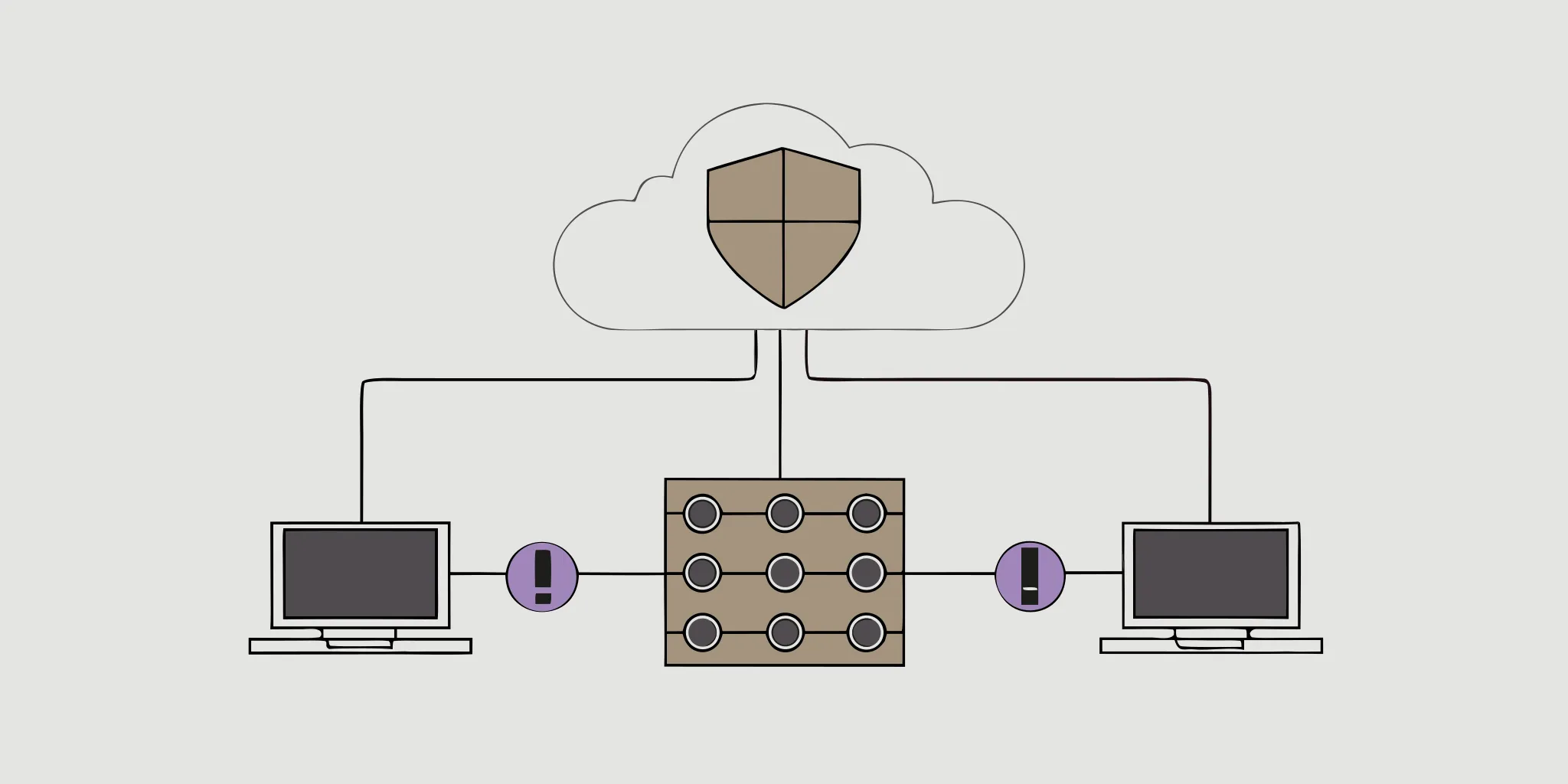
Cloud delivery does not, by itself, make vulnerability management predictable. The commercial model determines whether broader coverage is practical or whether every new asset creates another licensing decision. Under per-asset pricing, teams often have to forecast inventory changes, segment environments around license limits, and decide which systems receive the deepest monitoring. That can leave coverage gaps precisely when cloud workloads, subsidiaries, or client environments expand.
A flat-rate model approaches the problem differently. One price covers the environment, so the security team can include newly deployed assets without treating each addition as a budget exception. The important comparison is not simply the number of scanner features. It is whether the platform can maintain useful visibility across the environment while supporting the operational work that follows discovery.
Coverage should include more than asset discovery
Ayewo combines automated vulnerability scanning with AI-powered penetration testing, SCADA and ICS assessment, and compliance reporting. That broader scope matters when a team needs to evaluate traditional infrastructure alongside operational technology or demonstrate a repeatable process for frameworks such as PCI-DSS. HIPAA, NIST, SOC 2, or CMMC. Teams can also review automating compliance-driven scanning without treating compliance evidence as a separate manual project.
Ayewo's architecture also uses encrypted temporary scan environments with zero data retention. For organizations evaluating cloud scanners, that is a material coverage consideration. Not just a privacy statement: the assessment process must fit the organization's handling requirements before it can be used consistently.
Connect findings to operational response
Scanning identifies exposure, but security operations still need trustworthy event context, prioritization, and records that stand up to review. HSEC Sentinel complements vulnerability management as a next-generation SIEM, using cryptographically verified events, an immutable chain of custody, and tamper-evident compliance records. Together, the two products support a clearer path from finding a weakness to documenting the response.
For senior IT leaders and vCISOs, the practical test is straightforward: does the price model let you scan the environment you actually manage. And does the coverage produce evidence your team can act on? A flat-rate, U.S.-built platform such as Ayewo can make that answer more consistent than a tool whose cost rises with every asset.
How Flat-Rate Pricing Changes the Total Cost of Ownership
Total cost of ownership is not limited to the line item for a vulnerability scanner. It also includes the operational cost of deciding which assets to monitor, handling growth, investigating findings, and explaining budget changes to leadership. A per-asset model can make each new host, cloud workload, or device feel like a reason to reduce coverage. That creates the wrong incentive: the environment grows, but the measured attack surface stays artificially narrow.
Flat-rate pricing changes that equation. Teams can scan the full environment without treating every newly discovered asset as an immediate pricing event. Annual spend becomes easier to forecast, while coverage can follow the business rather than the billing model. That matters for vCISOs and security leaders responsible for several clients, acquisitions, hybrid infrastructure, or fast-changing cloud estates.
What flat-rate pricing removes from the TCO calculation
- Coverage tradeoffs: Teams do not have to decide which systems to exclude simply because inventory expanded.
- Budget volatility: New hosts and workloads are less likely to create an unexpected midyear cost increase.
- Administrative overhead: Procurement and finance can plan around a predictable annual security investment instead of repeated asset-count reconciliations.
- Hidden labor: Analysts can spend more time prioritizing remediation and less time rationalizing what should be scanned.
The labor component deserves particular attention. NIST research describes vulnerability management as a painful, time-consuming process, with some organizations spending thousands of hours annually identifying, triaging, and remediating vulnerabilities. False positives add another layer of wasted effort and can erode confidence in the program. A pricing model that supports broad coverage is valuable, but the platform still needs useful prioritization and accurate findings to lower operational TCO.
Ayewo applies this approach through flat-rate automated vulnerability scanning and AI-powered penetration testing, with encrypted temporary scan environments and zero data retention. Its 100% US-built architecture also gives organizations a clearer basis for reviewing data handling and supply-chain requirements. Teams evaluating HIPAA compliant vulnerability management can assess those controls alongside coverage, reporting, and remediation workflow rather than treating price as an isolated metric.
The practical result is a shift from per-asset metering to predictable annual spend tied to a security outcome: continuous visibility across the environment. With fewer reasons to leave known assets outside the program.
Request insight on a flat-rate approach to your vulnerability management program.
Frequently Asked Questions
What should I look for in a Qualys alternative?
Evaluate coverage, asset discovery, prioritization, reporting, integrations, and the pricing model together. The right platform should support your operating model, produce evidence your auditors can use, and make recurring costs predictable. Confirm how it handles cloud workloads, endpoints, network devices, and specialized environments before committing.
Why do organizations look for alternatives to Qualys?
Common drivers include per-asset pricing, difficulty forecasting costs as the environment changes, operational friction, and the time required to triage findings. A replacement should be assessed against those specific constraints rather than selected solely because it has a similar feature list.
How do Tenable and Rapid7 compare with Qualys?
Tenable and Rapid7 are established commercial options that organizations often evaluate alongside Qualys. The meaningful comparison is not the brand name alone. Review detection coverage, prioritization logic, reporting workflows, integrations, support expectations, and whether the commercial model fits your asset-growth pattern.
Are open-source tools a practical alternative to Qualys?
Open-source scanners can be useful for teams with the expertise to operate, tune, maintain, and validate them. They may not provide the managed workflows, compliance reporting, support, or predictable end-to-end operating model that a security team needs. Include labor and governance requirements in the total-cost assessment.
Can a flat-rate platform support compliance-driven vulnerability management?
Yes, if the platform combines recurring vulnerability scanning with usable remediation evidence and compliance reporting. Ayewo provides automated vulnerability scanning, AI-powered penetration testing, SCADA and ICS assessment, and compliance reporting on a flat-rate model. Its encrypted temporary scan environments support a zero-data-retention architecture.
Ready to Explore a Flat-Rate Qualys Alternative?
If per-asset pricing makes vulnerability management difficult to forecast, the next step is to review an approach built around predictable budgeting and practical security coverage. Explore Ayewo as a flat-rate Qualys alternative for vulnerability management, then assess whether it fits your organization's operating model. Get started by reviewing the product details and deciding whether a deeper conversation is warranted.